
Casting calls stack up, addresses change by the hour, and the weather refuses to cooperate. Fashion week is less about glamour than logistics, and the models who handle it best are rarely the ones dragging the biggest suitcase. They are the ones whose bags were packed the night before, whose heels are already broken in, and who can produce a comp card without emptying a tote across a lobby floor.
What follows is a practical checklist you can reuse every season, whether that means February in New York, Milan and Paris, or September shows where the rain arrives mid-afternoon.
Start With One Reliable Casting Bag
Build everything around a single bag you can carry all day: a structured tote or backpack that closes properly, sits on your shoulder without sliding, and does not tip over when you set it down. Keep it packed between days and simply refill it each night instead of rebuilding it from scratch.
- A stack of 20 to 40 comp cards
- Your portfolio or tablet, if your agency asks for one
- Heels in a drawstring bag, plus flats for walking between appointments
- Portable phone charger and cable
- Water bottle and two or three snacks
- Safety pins, fashion tape, blister plasters, bandages
- Lint roller, stain pen, blotting papers, hair ties, lip balm
- Mini deodorant and a small sewing kit
On show days, swap down to a smaller bag holding only shoes, a change of clothes and your phone. The big tote stays at home or in the car.
Shoes Do More Work Than Anything Else
Choosing the heels
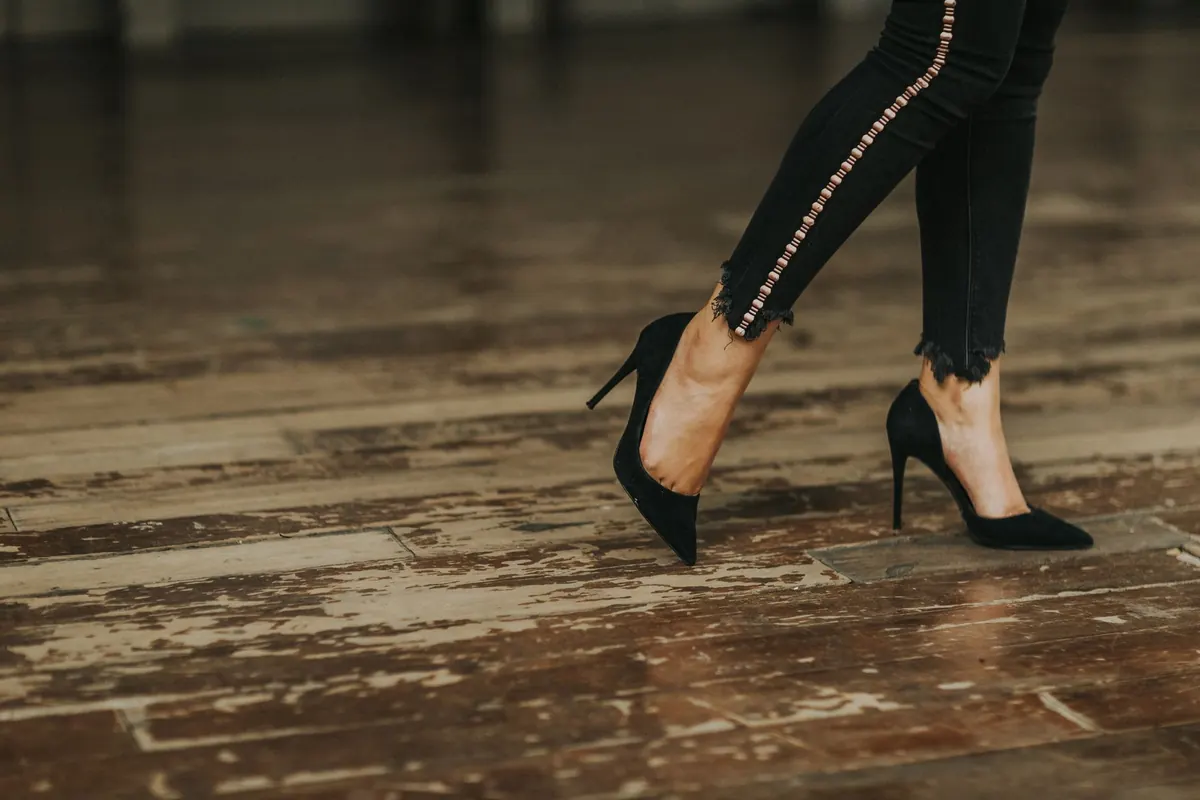
Two pairs, maximum: one black, one nude. Choose a height you can actually walk in, because you will be walking — through showrooms, up staircases, across cobblestones. Break them in at least a week before your first casting by wearing them indoors with thick socks for twenty minutes at a time. Brand-new heels on day one mean blisters by mid-afternoon and a shortened stride in front of the people deciding whether to book you.
Keep heel grips, gel pads and blister plasters inside the shoe bag itself, so they travel with the shoes rather than getting lost at the bottom of your tote.
Everything else
Clean flats or minimal sneakers handle transit. In cold markets, add a pair of boots with a low heel. Pack no-show socks for the heels and warm socks for the boots, plus a plastic bag for wet shoes on rainy days.
Comp Cards and the Paper Trail
Even in a largely digital market, printed comp cards still get handed over. Carry more than you think you need — twenty to forty per day — and split them between two places so one lost stack does not end your afternoon. Keep a pen with them.
Screenshot your schedule, and if you can, write the addresses down as well. Phone batteries drain quickly in cold weather, and casting rooms have a way of eating an afternoon without a single free outlet.
Keep a look log
Note what you wore to each casting, in your phone or a small notebook. If a client calls you back, repeating the same look keeps the callback coherent, and it stops you second-guessing yourself at 7am.
Weather Gear and the Layering Problem
Fashion week crosses seasons. February in New York, Milan and Paris is genuinely cold; September shows can be humid and then wet. Either way, you will spend the day moving between outdoor transit and casting rooms heated to summer.
Dress in layers you can strip quickly: a base layer, a mid layer, and a coat that packs down small enough to fold into your bag.
- A compact umbrella
- A plastic sleeve or waterproof cover for your comp cards
- Gloves that work with a touchscreen
- A scarf that doubles as a blanket on trains and in waiting rooms
- Sunglasses
- A beanie or headscarf for rain and humidity
- A spare pair of socks
Rain undoes a blowout fast. If you have a long day ahead, a headscarf and a small brush will do more for you than trying to protect a style that was never going to survive the subway.
Backup Outfits and the Emergency Kit
Two backup looks cover almost every situation. One should be clean, simple and fitted — a plain tank or tee with straight trousers or dark jeans. The other can be slightly more polished: a slip dress, a blazer, a fine knit. Castings want to see your silhouette and your walk, so skip large logos, busy prints and anything you have to tug back into place every few minutes.
Underwear in nude and black, both seamless. Tights, always, in twos.
Two pairs of tights, every day. Ladders do not wait for a convenient moment.
Alongside those, keep a small pouch with: painkillers you know you can take, plasters, a nail file, deodorant wipes, hair pins, and a spare pair of contact lenses if you wear them.
Food, Water and Energy
Snacks that survive a tote: nuts, dried fruit, protein bars, crackers, a banana. Eat something small before a walk-through rather than a heavy meal, and drink water through the day instead of waiting until you are thirsty. Long days with tight schedules are physically demanding, and going hours without eating tends to show up in your energy and your walk.
If you are unsure how to eat and rest well through a busy week, ask a doctor or dietitian rather than copying another model's routine — bodies and schedules differ. If anyone pressures you about your weight or body in a way that feels wrong, tell your agency, a booker you trust, or someone close to you.
The Night-Before Routine
Ten minutes the evening before saves an hour in the morning.
- Check tomorrow's schedule and screenshot every address.
- Map the route between appointments and group them by neighbourhood where you can.
- Lay out your outfit and pack the bag.
- Charge your phone and your battery pack.
- Refill snacks and water.
- Set two alarms, ten minutes apart.
In the morning, eat breakfast, leave fifteen minutes earlier than you think you need to, and expect to wait. Waiting is part of the job, so bring something to read. Arriving early, calm and ready to walk into the room is a professional signal, and it is the version of you that gets remembered when callbacks are decided.
Photo: cottonbro studio / Pexels